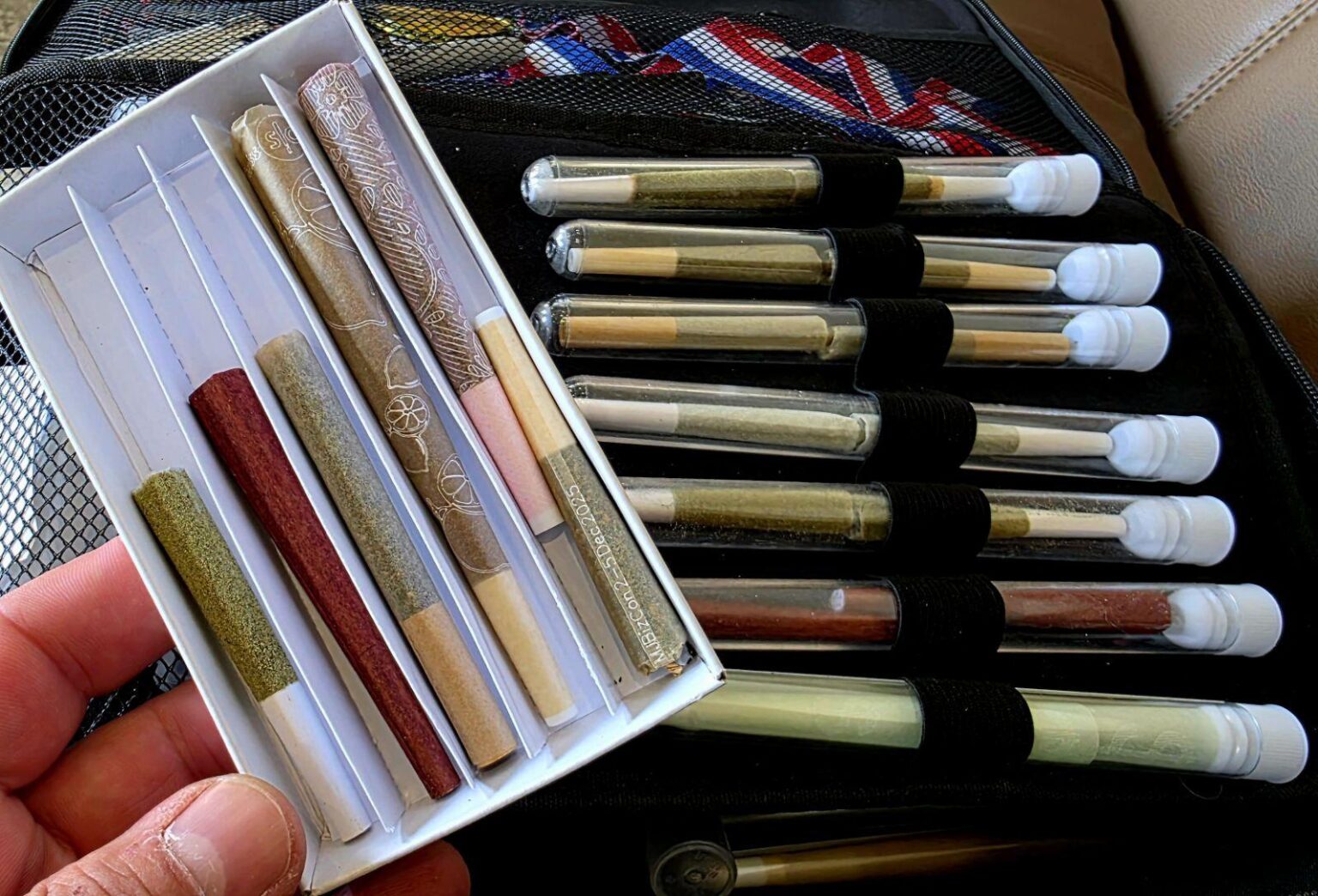
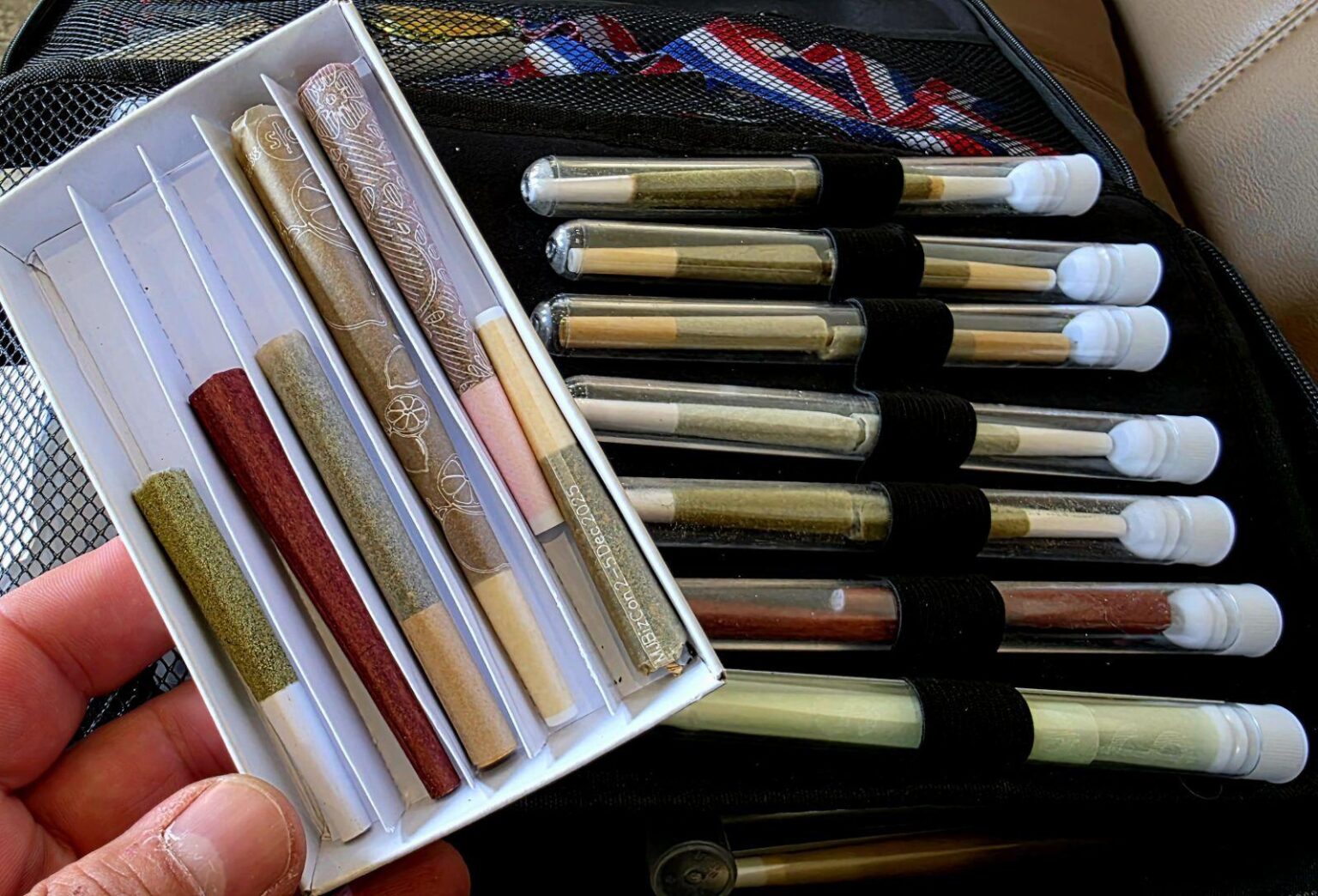
While operators closely monitor potency, terpene profiles, and eye-catching packaging, they frequently manage fill weights by manually weighing a tiny sample size per batch. This blind spot connects three core commercial priorities: compliance, operational margin, and customer experience. A variance of a few hundredths of a gram looks harmless on a single joint, but repeated across tens of thousands of units daily, that deviation compounds into a systemic process flaw. When managing dozens of SKUs across multiple markets, holding precise target weights manually becomes nearly impossible. Weight problems stay invisible until a regulatory audit, customer return, or retail buyer complaint brings them to light.
This guide breaks down the root causes of pre-roll weight variance, quantifies its hidden costs, provides a statistical framework to measure performance, and details how modern automation corrects weight drift at scale.
What "Weight Inconsistency" Really Means
Weight inconsistency is the variance between your target fill weight and actual unit weight across a run. To fix it, operators must distinguish between accuracy and precision:
- Accuracy: Indicates whether the average weight of your batch hits the target fill weight.
- Precision: Measures how tightly individual unit weights cluster around that average (pre-roll weight spread).
Weight Precision Diagram
WEIGHT PRECISION
Wide Weight Spread = Low Precision
Narrow Spread = High Precision
A line can average exactly 1.0g (high accuracy) while suffering a wide standard deviation ranging from 0.8g to 1.2g (low precision). Underfilled units fall short of label claims and create regulatory exposure. Overfilled units give expensive flower away on every single package.
Setting targets "a little high to be safe" converts a precision failure into a permanent margin leak. The true solution is achieving a tight pre-roll weight spread, allowing your facility to safely target legal label minimums without compliance exposure.
The Three Costs of Inconsistent Weight
Compliance
State cannabis regulations strictly govern label claims. Underfilled units expose brands to fines, failed state audits, and product recalls. A wide weight deviation makes it difficult to prove process control under state compliance guidelines or broader cannabis GMP standards. Consistent, automated weight logging provides verifiable audit readiness during state inspections.
Waste and Margin
Overfilling is a silent profit leak. Because flower represents a manufacturer's highest input cost, tiny per-unit giveaways add up quickly at volume. Furthermore, manual weight corrections lead to excessive material loss in pre-roll production, including rejects, torn papers, and bent crutches from manual rod tamping. Eliminating weight variance protects margins without requiring price increases.
Customer Experience and Retail Relationships
Consumers immediately spot uneven packaging or thin joints. Weight variation alters density, causing uneven combustion, poor airflow, and canoeing. When a joint burns poorly, consumer trust drops. Dispensary buyers respond with slower reorders, customer returns, and reduced shelf space. High-value category items, such as premium and infused pre-rolls, are held to even stricter customer standards.
Where Weight Drift Comes From
Weight drift stems from multiple compounding variables across the production line:
- Manual Filling Discrepancies: Operator fatigue, technique shifts, and pacing variations across shifts.
- Inconsistent Grind: Non-uniform particle size changes bulk density and settling behavior.
- Material Dynamics: Variations in strain, batch moisture levels, and sticky trichome buildup alter flow.
- Imperfect Pre-Formed Cones: Paper batch shape and paper volume variances change internal capacity.
- Volume-Based Dosing: Volumetric tray filling assumes constant density, which fluctuates constantly in natural plant material.
- Rod Tamping Forces: Mechanical compaction rods cause uneven compaction, bent crutches, and torn paper.
- Environmental Shifts: Uncontrolled room humidity and temperature alter flow dynamics mid-run.
- Calibration and Wear: Uncalibrated load cells, worn feeders, and manual SKU changeovers introduce human error.
How to Measure Weight Performance
You cannot optimize what you do not measure. Infrequent spot checks miss real-time drift. High-efficiency quality control programs track specific statistical metrics:
TARGET WEIGHT
|
AVERAGE WEIGHT STANDARD DEVIATION
(Measures Bias) (Measures Precision)
- Average Fill Weight vs. Target: Identifies overall process bias (systematic overfilling or underfilling).
- Standard Deviation (): Quantifies absolute weight precision across a run.
- Tolerance Outliers (%): Tracks the percentage of units falling outside legal limits.
- First-Pass Yield (FPY): Measures the proportion of units meeting weight and quality specs on the first pass without rework.
- Process Capability (Cp / Cpk): Evaluates if your process can consistently produce within defined tolerance limits.
To establish a baseline, sample 100 consecutive units across different shifts and operators. Plotting this data on a histogram clearly reveals underlying process bias, wide variance, or operator-specific drift.
A Step-by-Step Framework for Improving Accuracy
- Define Written Specifications: Establish clear target weights, strict upper/lower tolerances, and cone specifications for every SKU.
- Establish Baseline Measurement: Document existing standard deviation and yield before making equipment changes.
- Standardize Milled Particle Size: Utilize precision milling, such as the GrindPRO Precision Cannabis Mill, which processes up to 125 lbs/hr with dedicated 2 mm screening to separate stems and preserve trichomes.
- Control Moisture Content: Target 50–55% relative humidity and 62–72°F environment to prevent clumping and flow fluctuations.
- Standardize Cones: Transition to precision, untouched machine-made supply chains like domestic Swiss Cones (manufactured in Iowa) to eliminate cone volume variance.
- Transition to Weight-Based Dosing: Replace volume-based volumetric trays with direct gravimetric target weighing.
- Replace Rod Tamping: Upgrade to non-contact air compaction to protect joint structure and filter integrity.
- Lock In Saved Digital Recipes: Save speed, fill, and vibration profiles into machine memory to ensure shift-to-shift consistency.
- Implement Scheduled Calibration: Calibrate scales, optical sensors, and dosing feeders on a strict routine.
Manual vs. Automated Filling
While manual knock-boxes suit small craft runs, scaling requires automation to remove operator variance.
Tray System Comparison Table
| Feature / Metric |
Manual / Semi-Automated Trays |
Fully Automated System (PRO2) |
| Dosing Method |
Volumetric / Visual Estimation |
Gravimetric Weight-Based Fill |
| Weight Precision |
High Variance (± 0.08g – 0.15g) |
Tight Spread (± 0.01g – 0.02g) |
| Compaction Method |
Manual Vibration / Rod Tamping |
Non-Contact Air Compaction |
| Compaction Damage |
High (Bent Crutches, Torn Paper) |
Minimal (Preserves Paper and Filter) |
| Changeovers |
Manual Tooling Adjustment |
Saved Digital Recipes / Tool-Free |
| Quality Control Data |
Paper Log Spot Checks |
Real-Time AI Visual Inspection & Reporting |
How the PRO2 Supports Weight Accuracy
The PRO2 Automated Pre-Roll Machine is engineered around precise weight control:
PRO2 ACCURACY ARCHITECTURE
- Fast-First / Slow-Final Gravimetric Filling + Concurrent Vibration
- Active Cone Expansion & Correction Stations
- Non-Contact Air Compaction (Eliminates Rod Tamping Damage)
- Real-Time Laser Line Scanners & Depth Profiling
- AI Visual Inspection and Automatic Non-Compliant Unit Rejection
- Precision Gravimetric Filling: Uses a "fast-first, slow-final" dosing approach paired with concurrent vibration for dose accuracy.
- Cone Correction: Active expansion stations reshape incoming paper, ensuring smooth placement.
- Air Compaction: Replaces mechanical tamp rods with configurable pneumatic pulses, preventing bent crutches and paper damage.
- Integrated Laser & Depth Sensors: Real-time sensors measure fill depth and crown formation, identifying variance before sealing.
- AI Visual Inspection: Photographically logs every unit, automatically detecting and segregating non-compliant products.
- Digital Recipe Management: Saved software profiles allow tool-free SKU changeovers, locking in exact metrics across facility locations.
- High-Throughput Output: Delivers up to 2,150 units per hour. Supported by onboard iPad connectivity with direct Slack access to US-based engineering teams.
Infused and Kief-Coated Products
Infused and coated products double compliance complexity: inconsistent base fill weight corrupts downstream concentrate dosing. If base joint weights vary wildly, applying uniform concentrate layers results in non-compliant final potency and uneven burn rates.
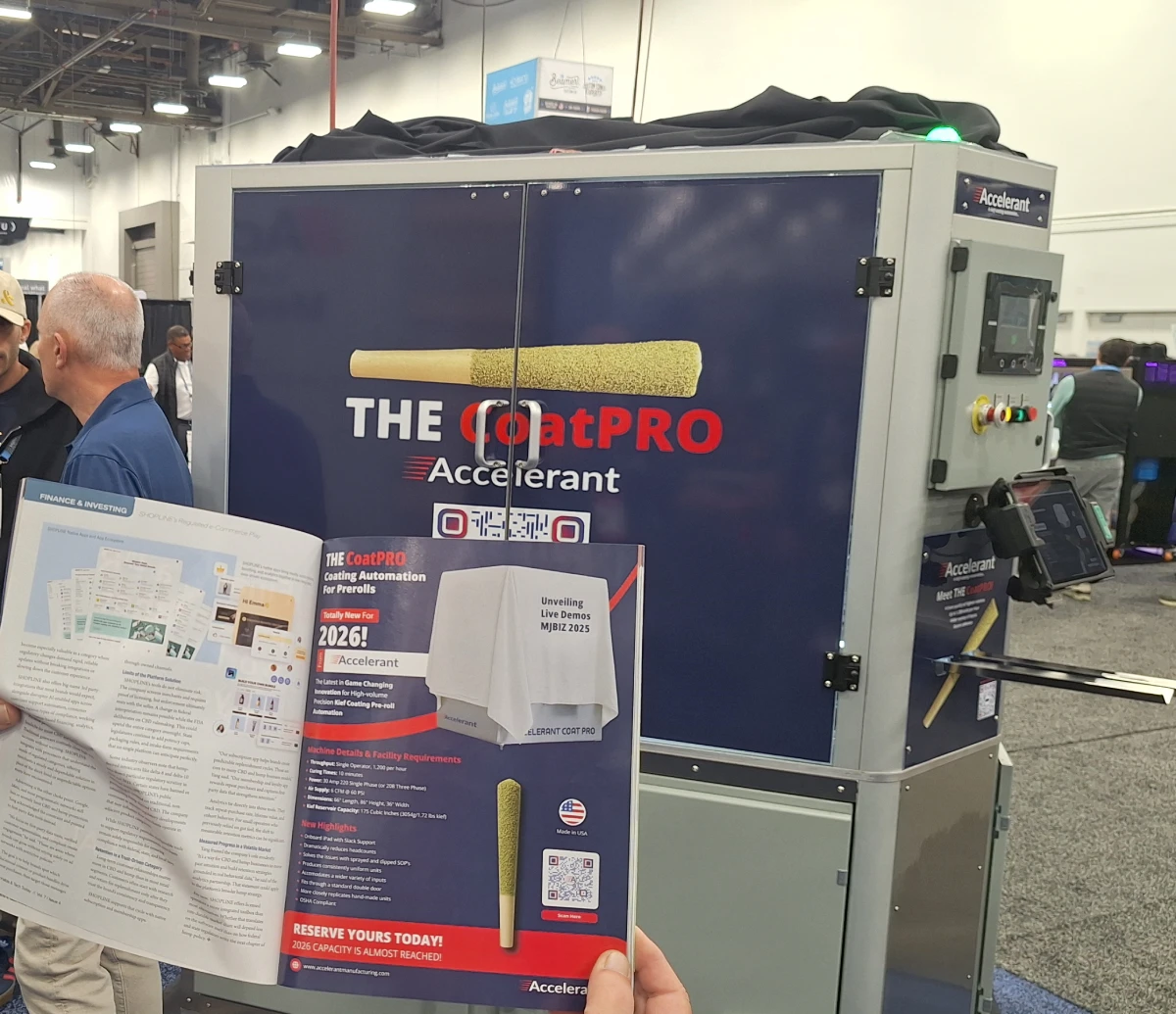
Automating the base fill creates a uniform substrate for downstream processes. Systems like the CoatPRO Kief-Coating Machine coat up to 1,200 pre-rolls per hour. By standardizing kief application, manufacturers ensure consistent potency, precise unit weights, and clean aesthetics without messy manual dipping or spraying.
Buy Equipment or Use Production-as-a-Service (PaaS)?
Scaling pre-roll production no longer requires heavy upfront capital expenditure. Through Accelerant's Production-as-a-Service (PaaS) model, operators can deploy PRO2 or CoatPRO systems with zero capital investment, paying an all-inclusive per-unit throughput rate.
CAPEX PURCHASE vs. PaaS MODEL
CapEx Model: High Upfront Cash -> Depreciating Asset -> Maintenance
PaaS Model: $0 Upfront CapEx -> Operational Cost -> Included Service
- CapEx Purchase: Ideal for mature facilities with stable cash reserves, long product lifecycles, and dedicated in-house maintenance teams.
- PaaS Model: Ideal for rapidly growing operations that need to preserve capital, scale from 2 to 20 machines, and ensure ongoing US-based maintenance, parts, and software updates without technical debt.
Operational Assessment Checklist
If you check two or more of the following boxes, your pre-roll line is likely leaking margin through weight drift:
- [ ] We do not log individual pre-roll weight data in real time.
- [ ] We rely on volumetric tray dosing rather than gravimetric weighing.
- [ ] We deliberately overfill target weights to avoid state compliance fines.
- [ ] Our production line frequently rejects units due to bent crutches or torn paper.
- [ ] Particle sizes vary significantly between flower batches.
- [ ] Shift changeovers require manual machine adjustments by technicians.
- [ ] We receive customer or retailer complaints regarding uneven burns or canoeing.
- [ ] Scales on the production floor are calibrated infrequently.
- [ ] We cannot calculate our exact monthly flower giveaway cost.
Key Takeaways
- Weight Integrity Impacts the Whole Brand: Fill weight affects regulatory compliance, operational margins, and customer retention simultaneously.
- Precision Controls Cost: Overfilling is a silent, ongoing cost; underfilling creates legal compliance exposure.
- Systemic Fixes Are Required: Weight drift is driven by plant moisture, particle grind size, paper cone consistency, and mechanical dosing methods working together.
- Data-Driven Quality Control: Track standard deviation, first-pass yield, and giveaway costs alongside simple average weights.
- Automation Protects Margins: Systems built with weight-based dosing, non-contact air compaction, and AI inspection eliminate human error and secure reliable product quality.
Frequently Asked Questions
What is an acceptable weight tolerance for pre-rolls?
While regulatory tolerances vary by state (typically within $\pm 5\%$ to $\pm 10\%$), high-performing commercial operators target tighter internal operational limits ($\pm 2\%$) to maximize profit margins and eliminate regulatory risks.
Is overfilling really a problem if customers get more product?
Yes. Overfilling represents unaccounted product giveaway that directly reduces gross margins. Furthermore, overpacking increases density, restricting airflow and causing harsh draws or bad burns.
Why not just set the target a little high?
Setting targets high guarantees product giveaway on every unit produced. The correct operational approach is narrowing your process standard deviation so you can target legal minimums safely.
Does grind size affect fill weight?
Yes. Particle size distribution dictates bulk density. Inconsistent particle sizes cause unpredictable settling and weight drift during volumetric dosing. Using precision mills like the GrindPRO ensures uniform particle density.
Does moisture matter for weight consistency?
Moisture content directly impacts material flow and compressibility. Operating between 50–55% RH prevents flower clumping and weight variations during filling.
Can one machine handle different cones and SKUs?
Modern automated systems like the PRO2 support standard cones, ceramic tips, blunts, and straight cylinders using saved software recipes and tool-free hardware changeovers.
How fast does the PRO2 run?
The PRO2 delivers field throughput of 1,700 to 2,150+ units per hour depending on product line configuration and material characteristics.
Does automation replace my team?
Automation reallocates labor from repetitive manual filling to high-value quality assurance, material management, and packaging workflows.
How do I know if my process is ready to scale?
If your first-pass yield exceeds 95% and your process standard deviation is tightly controlled, your workflow is ready for automated scaling.
Can I outsource filling instead of buying equipment?
Yes. Accelerant’s Production-as-a-Service (PaaS) model lets you place automated filling and coating hardware directly in your facility on a per-unit fee structure without upfront capital expenditure.