How to Increase Pre-Roll Production Without Expanding Your Workforce
Ramping up pre-roll production shouldn’t mean expanding your payroll. This article explores how cannabis operators can bypass the costly pitfall of hiring and scale their output to 2,000 units per hour using advanced equipment architecture. As experts in high-throughput cannabis manufacturing, we provide a deep dive into eliminating the four major production bottlenecks, from grind inconsistency to QC delays. Discover actionable advice on shifting to a Production-as-a-Service (PaaS) model to dramatically maximize your margins, lower per-unit costs, and de-risk your scaling strategy.
Pre-roll demand in the cannabis market continues to surge, driven by consumer preference for convenience and premium products. Yet, scaling production manually leads to rising labor costs, inconsistent quality, and shrinking margins as wages rise and hiring becomes tougher. COOs and Production Directors face a reality check: adding headcount doesn't just inflate payroll; it amplifies overhead, training expenses, and compliance risks while capping throughput due to human variability.
Production scale hinges on equipment architecture, not staffing levels. This article breaks down the four key production bottlenecks limiting your pre-roll output, showcases systems like automated pre-roll machines, pre-roll filling machines, kief-coating machines, and infused pre-roll automation that eliminate them, delivers straightforward ROI math, and explains how scalable cannabis manufacturing via Production-as-a-Service (PaaS) lets operators ramp up to 2,000 units per hour without growing payroll. Discover how to turn engineering solutions into margin gains.
Why Adding Headcount Is the Most Expensive Way to Scale Pre-Roll Output
Relying on more workers to boost pre-roll production is a pitfall that erodes profitability. Cannabis production wages now average $18–22 per hour, but true costs balloon with 25–35% overhead for benefits, insurance, training, and turnover. Manual lines suffer from inconsistent shifts, and quality dips, spiking rejection rates to 3–8%.
Manual filling tops out at 300–400 units per hour per operator and is prone to high variability, causing uneven burns, compliance issues, and waste. In contrast, automated systems hit 1,500–2,000 units per hour with precision. Operators prioritizing output per labor dollar gain a distinct margin advantage in a competitive MSO landscape.
Key Insight: Operators who improve output per labor dollar gain a margin advantage.
The 4 Production Bottlenecks That Cap Your Pre-Roll Output
Most pre-roll lines hit walls due to four core constraints: grind inconsistency, filling limitations, infusion challenges, and QC delays. These bottlenecks limit scalable cannabis production, turning potential revenue into frustration.
Bottleneck #1: Inconsistent Grind Quality
Particle size variability from blade grinders creates chaos downstream. Uneven grinds lead to cone jams, poor fill density, uneven burns, and higher rejections. Precision milling delivers uniform particles, preserving trichomes for better potency and flavor while ensuring smooth filling.
Bottleneck #2: Manual or Semi-Automated Filling
Vibratory or hand-filled systems demand multiple operators and cap output at 600–800 units per hour. Picture a line with four workers generating $50K in monthly revenue at a $10 wholesale per pre-roll, yet labor eats up 20–30% of that. Full automation makes it easy for freeing revenue potential.
Bottleneck #3: Infused and Kief-Coated Product Production
Manual coating wastes material through uneven adhesion and loss, slowing throughput and harming appearance consistency. Scaling manually can't match demand without a massive headcount.
Bottleneck #4: QC and Packaging Delays
Manual inspections bottleneck lines, relying on sampling that misses defects and invites compliance risks. Full-line QC automation inspects every unit, slashing rejections and ensuring audit-ready consistency.
Start Upstream: How Consistent Milling Improves Fill-Line Performance
Automation begins with milling to set the foundation. Low-RPM precision grinding outperforms high-RPM blades by preserving trichomes, yielding uniform particle size for consistent burns and accurate fills. This reduces jams by 80% and boosts density control, supercharging downstream efficiency.
Product Reference: GrindPRO Milling System consistent milling system. This system ensures every batch feeds your line flawlessly.
From 600 to 2,000 Units Per Hour: What a Modern Pre-Roll Filling Machine Delivers
Modern pre-roll filling automation catapults output to up to 2,150 infused units per hour under a No-CapEx Production-as-a-Service (PaaS) model. The PRO2 Automated Pre-Roll Machine drastically slashes labor dependencies and minimizes downtime with operator-replaceable components and a built-in conveyor air knife to prevent jams.
Key evaluation and performance factors driven by the PRO2 include:
Precision Weight-Based Fill: Fast-first and slow-final dosing with concurrent vibration for high accuracy.
Depth Sensor Auto-Correction: Continuously sees production variance and automatically corrects to avoid overproduction of non-compliant units.
Cone Expansion & Correction: Ensures ideal cone shapes for acceptance and reduces humidity/static alarms.
AI Visual Inspection and QC: Photographically audits every single pre-roll, automatically identifying and segregating imperfect units.
Tool-Free Changeovers: Programmed recipes that ensure uniform aesthetics and packing across different markets and SKUs.
Onboard Slack Support & Reporting: An integrated iPad connecting operators directly to engineering alongside highly detailed production analytics.
Why Infused Pre-Roll Automation Is the Next Production Advantage
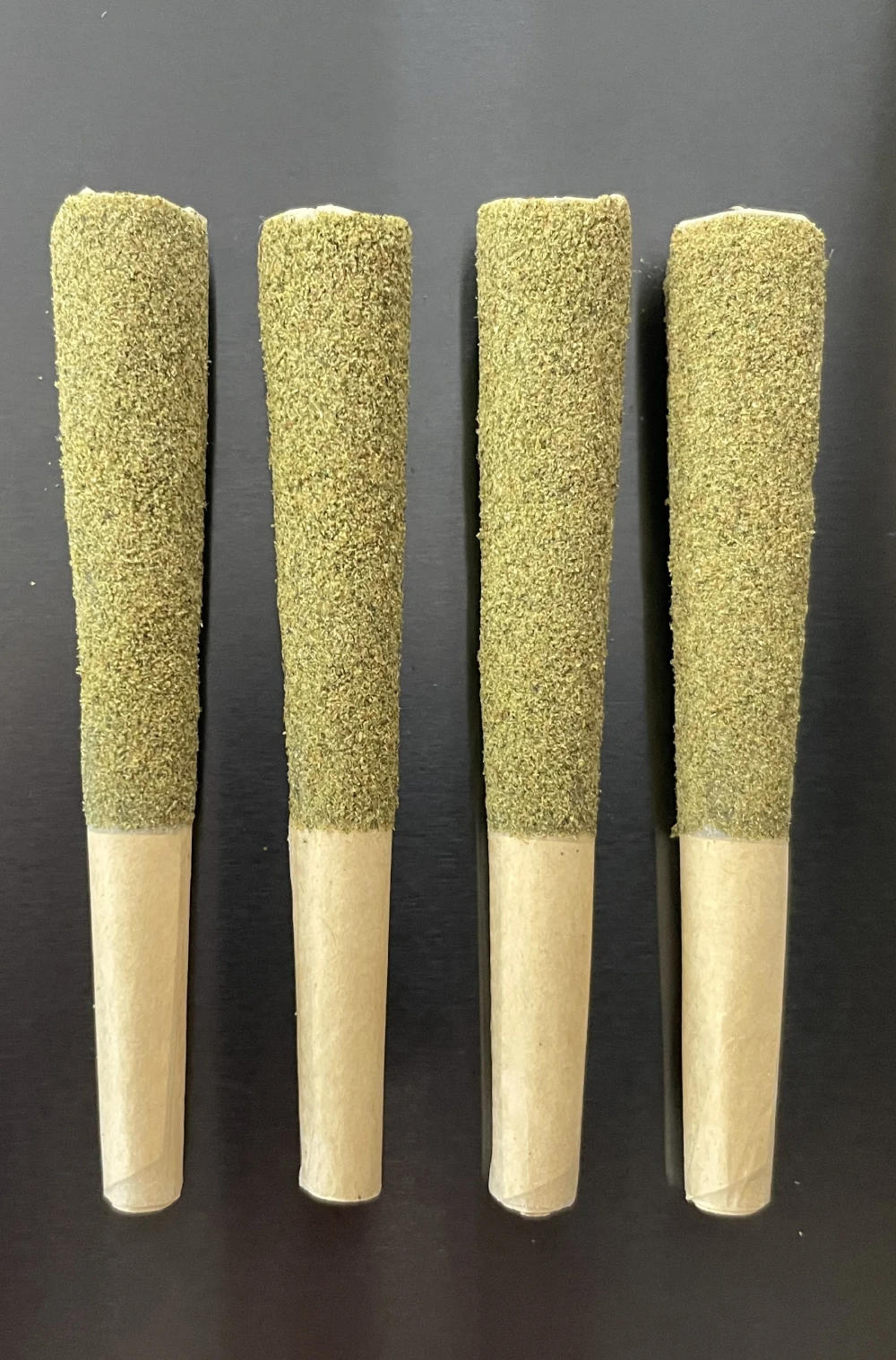
Infused SKUs command premium pricing, but manual coating fails at scale: sprayed and dipped SOPs suffer from uneven adhesion, inconsistent quality, and high labor dependency. The CoatPRO automated kief-coating machine provides high-volume precision by standardizing fluidization, spray, and confection methods to ensure a consistent, uniform finish that closely replicates premium handmade units.
Benefits encompass highly consistent coating, a quick 10-minute curing time, an optimized 175-cubic-inch kief capacity, and a massive throughput of at least 1,200 units per hour. Backed by an on-board iPad featuring direct Slack support to engineering, this OSHA-compliant platform unlocks scalable manufacturing for high-margin infused lines.
How to Calculate the ROI of Pre-Roll Automation
A simple cost-per-unit framework proves automation's value. Compare manual vs. automated across key metrics to forecast payback in months.
Automation Investment Barrier
Equipment costs deter many, but PaaS flips the script.
Production-as-a-Service Model
PaaS eliminates CapEx with throughput-only billing pay per pre-roll produced. Incentives align perfectly: Accelerant succeeds when you scale. Faster ROI, no debt, pure scalability.
European gear means 6–12 month lead times, tariffs, and service headaches. US production delivers in weeks with local support.
Equipment locations: PRO2 in Iowa, CoatPRO V2 in Missouri, and GrindPRO in Maryland. Pair with US-made pre-roll cones for seamless supply chains.
What Implementation Looks Like for a Fully Automated Pre-Roll Line
Onboarding Accelerant’s fully automated pre-roll line is designed for seamless integration into your existing facility, minimizing downtime and disruption to ongoing operations. From initial consultation to full-scale production, the process prioritizes speed, tailored configurations, and equipment durability, enabling MSOs and production directors to hit peak throughput within weeks rather than months. This structured rollout ensures your team gains confidence in the system while immediately capturing ROI through higher output and lower labor demands.
On-Site Installation Week
The installation kicks off with a dedicated week on your floor, where Accelerant’s certified technicians handle everything from uncrating to full commissioning. They start by assessing your space layout, utility requirements (like power, air compression, and extraction), and raw material flow to optimize machine placement for efficiency, often integrating directly with your existing cone feeders or grind delivery systems.
Next, systems undergo rigorous configuration: calibrating sensors for your specific cone sizes (0.5g to 2g kings), programming initial recipes based on your strain profiles (e.g., indica vs. sativa density targets), and syncing upstream milling with downstream coating if applicable. Production testing follows, running 500–1,000 units through live cycles to verify fill accuracy (±0.05g), jam-free operation, and integration with your packaging line. By day five, you're producing at 80–100% capacity, with handover documentation including as-built diagrams and baseline performance metrics. This turnkey approach eliminates guesswork, getting you to validated output fast.
Operator Training
Empowering your team is core to success, delivered via PRO Operator University, a proprietary, hands-on program tailored for cannabis production staff. Training spans 1–2 intensive days, blending classroom theory with floor-based simulations to cover machine operation from startup to shutdown.
Key modules include:
Daily Operations: Cone loading, recipe selection via touchscreen (with 50+ presets for grind types, fill weights, and infusion ratios), and automated cone correction to handle warped papers.
Maintenance Routines: Quick-swap tooling (under 15 minutes), CIP (clean-in-place) cycles for compliance, and predictive upkeep like blade inspections via built-in diagnostics.
Recipe Management: Customizing parameters for new strains, saving profiles to the cloud, and A/B testing for optimal burn quality.
QC Interpretation: Reading real-time dashboards for weight variances, visual defect flags (e.g., overfills or air pockets), and auto-reject logs to maintain <1% rejection rates.
Post-training, operators earn digital badges for proficiency, and remote refreshers are available quarterly. This ensures even shift workers master the line, reducing errors and boosting uptime from day one.
Real-Time Monitoring
IIoT (Industrial Internet of Things) integration transforms your pre-roll line into a data-driven powerhouse. Accelerant’s cloud platform provides 24/7 dashboards accessible via web, tablet, or mobile app, streaming live metrics like units-per-hour, fill consistency, material usage, and OEE (Overall Equipment Effectiveness).
Proactive features include:
Error Alerts: Instant push notifications for jams, sensor faults, or recipe drifts, with AI-guided troubleshooting (e.g., "Check cone alignment 80% resolution rate").
Batch Reporting: Automated end-of-run summaries with traceability data (lot numbers, timestamps, QC pass rates) for compliance audits under state regs like California's track-and-trace.
Predictive Analytics: Trend analysis spotting wear patterns, forecasting maintenance (e.g., "Vibrator needs service in 72 hours"), and yield optimization suggestions based on historical runs.
This visibility lets COOs monitor multiple facilities remotely, scale recipes across sites, and benchmark against industry averages turning raw data into actionable insights for continuous improvement.
Ongoing Support
Under Accelerant’s Production-as-a-Service (PaaS) model, support goes beyond installation to create a true partnership. White-glove service includes unlimited remote diagnostics via IIoT, prioritizing your uptime with 4-hour response SLAs during production hours and next-business-day on-site for hardware issues.
PaaS aligns incentives perfectly: billing is throughput-based (per 1,000 units produced), so Accelerant’s team proactively tunes performance to maximize your output and minimize costs, with no flat fees eating margins during downtime. Annual system audits, free firmware upgrades (e.g., new AI for infused coating precision), and a dedicated account manager ensure evolving needs like new cone formats or regulatory changes are met swiftly.
For PaaS clients, exclusive perks include priority parts inventory (99% availability from US warehouses) and performance guarantees e.g., 1,800+ units/hour or we credit the difference. This model de-risks scaling, with many operators reporting 6-month paybacks and 3x ROI in year one through sustained efficiency gains. Implementation isn't just setup; it's the foundation for reliable, scalable cannabis manufacturing that grows with your business.
Scaling Pre-Roll Production Is an Engineering Problem
Labor scales poorly; equipment architecture dictates true output. Automated pre-roll machines, pre-roll filling machines, and kief-coating machines drive 2–3x throughput with uniform quality and full QC. Costs plummet per unit, margins soar without a single new hire.
Ready to Increase Pre-Roll Output to 2,000 Units Per Hour?
Accelerant’s PRO2 earned top innovation awards for cannabis automation.


.png)
.png)

.png)
.png)